
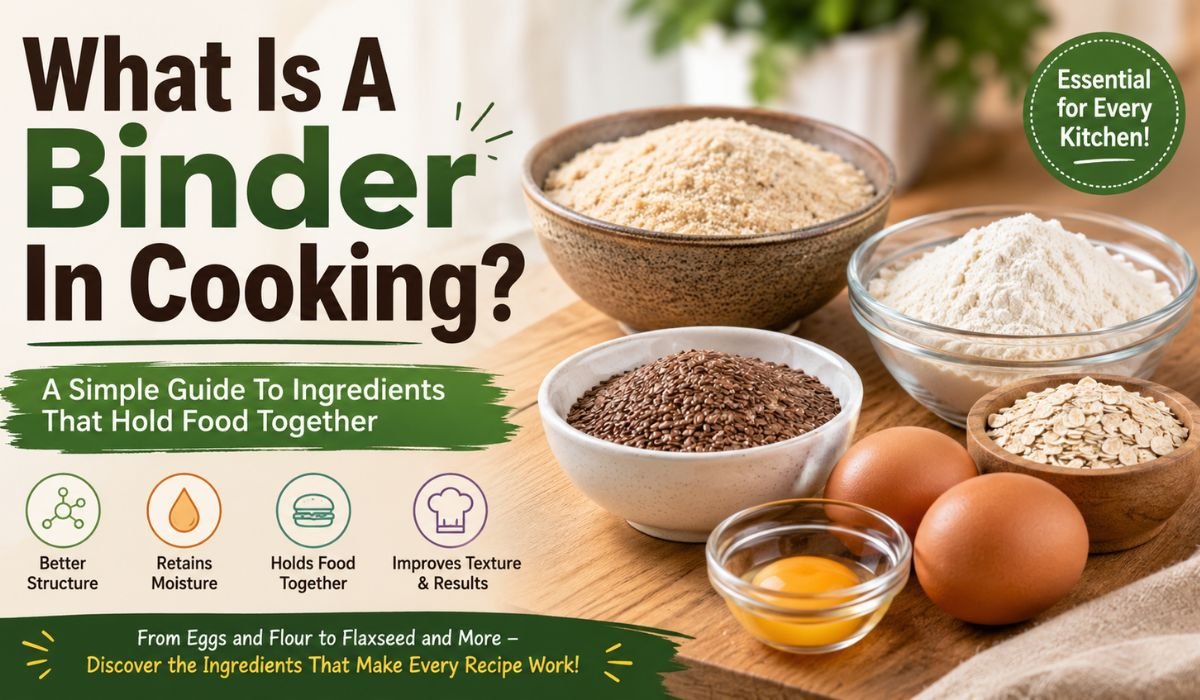
If you have ever made burgers that fall apart, cakes that crumble, or sauces that turn watery instead of smooth, you have already experienced what happens when a recipe is missing a proper binder. Understanding What Is A Binder In Cooking is one of those simple kitchen lessons that can completely change how successful your recipes turn out.
A food binder is not a single ingredient but a category of ingredients that help food stick together, hold shape, and maintain texture during cooking or baking. From everyday eggs and flour to modern plant-based alternatives like flaxseed and psyllium husk, binders are the quiet heroes behind many of the foods we love.
In this guide, we will explore everything about cooking binders in a clear and practical way. You will learn how they work, why they matter, and how to choose the right one for different recipes. By the end, you will understand not just What Is A Binder In Cooking, but how to use it like a confident home cook or even a professional chef.
Table of Contents
ToggleUnderstanding What Is A Binder In Cooking
A binder in cooking is an ingredient that helps other ingredients stick together and maintain structure. It works by creating a natural “glue effect” inside a recipe. This is especially important in foods like meatballs, baked goods, patties, dumplings, and even sauces.
When people ask What Is A Binder In Cooking, the simplest answer is this: it is any ingredient that prevents food from falling apart while also improving texture and moisture. Without binders, many recipes would not hold their shape or feel enjoyable to eat.
Why Food Binders Matter In Everyday Cooking
Food binders are essential because they directly affect how food behaves during cooking. They help mixtures stay stable under heat, pressure, or mixing. For example, a burger patty without a binder may break apart in a pan, while a cake without structure may crumble after baking.
Binders also improve moisture retention, which keeps food soft and pleasant instead of dry or brittle. They also help distribute ingredients evenly so every bite feels balanced. In modern cooking, binders are especially important for plant-based and gluten-free recipes where traditional structure-building ingredients are replaced.
How Food Binders Work In Simple Terms
The science behind food binders is surprisingly simple. Different types of binders work in different ways, but they all aim to create structure.
Eggs, for example, contain proteins that solidify when heated, forming a firm network that holds food together. Starches like flour or potato starch absorb liquid and swell, creating thickness and stability. Plant fibers like flaxseed or psyllium husk absorb water and form a gel-like texture that binds ingredients naturally.
Even though the science varies, the result is the same. The food becomes more stable, cohesive, and easier to shape.
Common Types Of Food Binders Used In Kitchens
Most kitchens already use food binders without realizing it. Eggs are the most common example, used in everything from baking to frying. Flour is another widely used binder that helps create structure in doughs and batters.
Breadcrumbs are often added to meat mixtures to help absorb moisture and hold shape. Milk and cream can also act as light binders in recipes that require softness and richness.
These everyday ingredients show that understanding What Is A Binder In Cooking is not about learning something new, but about recognizing what you already use.
Starch-Based Binders And Their Role In Structure
Starch-based binders are some of the most important in cooking. Ingredients like wheat flour, cornstarch, potato starch, and tapioca starch all fall into this category.
When heated, starch granules absorb water and expand. This process thickens liquids and helps mixtures stick together. That is why sauces become glossy, gravies become rich, and dough becomes elastic.
Starch binders are especially useful in baking and frying because they provide both structure and stability without overpowering flavor.
Protein-Based Binders And Strong Food Structure
Protein-based binders are powerful because they change structure when exposed to heat. Eggs are the most famous example. When cooked, egg proteins tighten and form a solid network that holds ingredients together.
Gelatin is another protein-based binder that creates a soft but stable texture, commonly used in desserts. Dairy proteins found in milk and evaporated milk can also help stabilize baked goods and custards.
These binders are especially useful when you need firm structure with a smooth texture.
Plant-Based And Fiber Binders For Modern Cooking
Plant-based binders have become increasingly popular in modern kitchens. Ingredients like ground flaxseed, chia seeds, oat flour, and psyllium husk are widely used as natural alternatives to eggs and dairy.
These ingredients absorb water and form a gel-like consistency that mimics the binding power of eggs. They are especially valuable in vegan and gluten-free cooking where traditional binders are not used.
Understanding these alternatives is an important part of learning What Is A Binder In Cooking in today’s food world.
Hydrocolloid Binders Used In Professional Kitchens
In professional cooking, chefs often use hydrocolloid binders like xanthan gum and guar gum. These ingredients are derived from natural fermentation or plant sources and are extremely effective in small quantities.
They help stabilize sauces, thicken liquids, and improve texture without changing flavor. Even though they are not common in home kitchens, they are widely used in restaurants and food manufacturing because of their precision and reliability.
These modern binders show how far cooking science has evolved while still serving the same basic purpose of structure and stability.
How To Choose The Right Binder For Your Recipe
Choosing the right binder depends on what you are cooking. For baking, eggs and flour are usually the best choices because they provide structure and stability. For vegan baking, flaxseed or chia seeds are better alternatives.
For meat-based dishes like burgers or meatballs, eggs and breadcrumbs work best because they absorb moisture and hold everything together. For sauces and soups, starch-based binders like cornstarch or potato starch are ideal.
Understanding this selection process helps you use What Is A Binder In Cooking in a practical and confident way.
Common Mistakes When Using Food Binders
One common mistake is using too much binder, which can make food dense, rubbery, or dry. Another mistake is choosing the wrong type of binder for the dish, which can affect texture and taste.
Some people also forget to adjust liquid levels when using absorbent binders like coconut flour or psyllium husk. This can lead to overly dry or thick results.
Avoiding these mistakes is just as important as understanding What Is A Binder In Cooking itself.
Food Binders Versus Thickeners Explained Simply
Food binders and thickeners are often confused, but they serve different purposes. A binder holds food together and gives structure, while a thickener changes the consistency of liquids.
For example, eggs bind a cake together, while cornstarch thickens a sauce. Both are important, but they are not interchangeable.
Understanding this difference helps you become more precise and confident in cooking.
Real Life Examples Of Food Binders In Action
Food binders are used in many everyday dishes. In meatballs, eggs and breadcrumbs keep everything compact. In cakes, flour and eggs create a soft but stable structure. In vegan burgers, flaxseed or oats help the patty hold its shape.
Even soups and sauces rely on binders like starch to achieve smooth, consistent texture. Once you recognize these examples, you begin to see how often binders appear in daily cooking.
Final Thoughts
Understanding What Is A Binder In Cooking gives you more control and confidence in the kitchen. These ingredients may seem simple, but they play a powerful role in shaping texture, structure, and overall success in recipes.
Once you learn how binders work, you can easily adjust recipes, fix cooking problems, and even create new dishes with better consistency. Whether you are baking, frying, or experimenting with plant-based cooking, food binders quietly ensure everything holds together the way it should.
Cooking becomes easier, more predictable, and far more enjoyable when you understand these small but essential ingredients.
Frequently Asked Questions About Food Binders
What Is A Binder In Cooking Used For
A binder is used to hold ingredients together, improve structure, and maintain texture in cooking and baking. It prevents food from falling apart and helps recipes stay stable during cooking.
What Is The Best Binder For Cooking Beginners
Eggs are the easiest and most reliable binder for beginners because they work in almost all savory and baking recipes and are simple to use.
Can I Replace Eggs With Other Food Binders
Yes, eggs can be replaced with flaxseed, chia seeds, banana, applesauce, or commercial egg replacers depending on the recipe type and desired texture.
What Is The Difference Between A Binder And A Thickener
A binder holds food together and gives structure, while a thickener changes the consistency of liquids like soups or sauces.
What Is The Best Vegan Binder In Cooking
Flaxseed mixed with water, chia seeds, and psyllium husk are some of the best vegan binders because they create a gel-like texture similar to eggs.
Why Do Some Recipes Fail Without A Binder
Without a binder, ingredients cannot stay connected during cooking, causing food to fall apart, lose moisture, or become dry and unstable.
Are Food Binders Healthy
Most food binders are safe and commonly used ingredients. Some, like oats, flaxseed, and almond flour, even add nutritional benefits such as fiber and healthy fats.
Recommended For You: Fameimpact.com Explained: A Complete Guide To Influencer Marketing Success
