
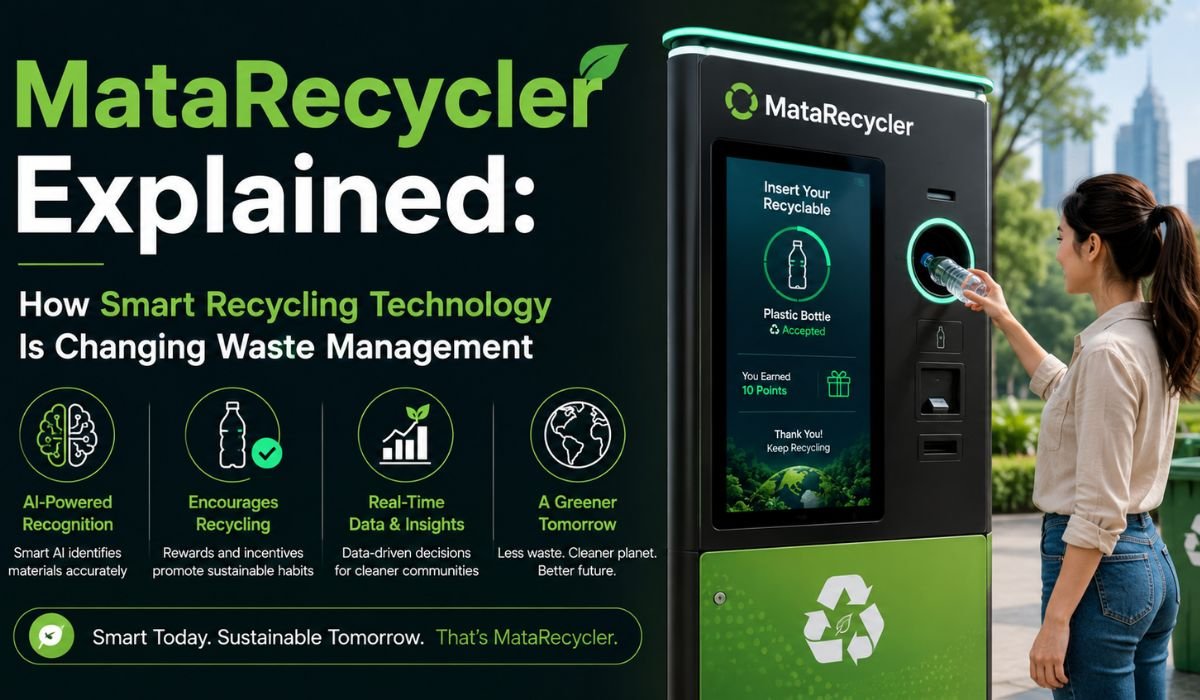
Waste management has become one of the biggest environmental challenges of the modern era. Every year, billions of tonnes of waste are generated around the world, and much of it still ends up in landfills despite growing recycling efforts. Communities, businesses, and governments are searching for smarter ways to handle waste while reducing environmental harm. This growing need has led to the rise of advanced recycling technologies that combine automation, data analysis, and artificial intelligence.
One of the most talked-about concepts in this space is MataRecycler. Designed around the principles of Smart Recycling Technology, MataRecycler represents a modern approach to Waste Management Solutions. By using Artificial Intelligence, Smart Sensors, Machine Learning, and Data Analytics, MataRecycler aims to improve recycling accuracy, reduce contamination, and help communities recover more valuable materials. As cities move toward smarter infrastructure and sustainability goals in 2026, systems like MataRecycler are becoming increasingly important.
Quick Bio Information About MataRecycler
| Information | Details |
|---|---|
| Name | MataRecycler |
| Category | Smart Recycling Technology |
| Purpose | Improve Recycling And Waste Management |
| Core Technology | Artificial Intelligence |
| Secondary Technology | Machine Learning |
| Sensor Integration | Smart Sensors |
| Data System | Cloud-Based Analytics |
| Primary Goal | Increase Recycling Efficiency |
| Focus Area | Waste Sorting Automation |
| Environmental Impact | Reduced Landfill Waste |
| Target Users | Communities And Municipalities |
| Business Users | Companies And Organizations |
| Smart City Role | Supports Smart Infrastructure |
| Material Types | Plastic, Metal, Paper, Glass, E-Waste |
| Key Benefit | Higher Sorting Accuracy |
| Sustainability Focus | Circular Economy Support |
| Waste Reduction Goal | Minimize Disposal Waste |
| Monitoring Capability | Real-Time Tracking |
| Future Direction | AI-Driven Waste Management |
| Industry Relevance | Sustainable Waste Management |
What Is MataRecycler?
MataRecycler is a modern recycling concept that uses Smart Recycling Technology to improve how recyclable materials are collected, identified, sorted, and processed. Traditional recycling systems often depend heavily on manual labor and simple mechanical equipment. While these methods have helped increase recycling rates over the years, they frequently struggle with contamination, inefficiency, and rising waste volumes.
MataRecycler addresses these challenges through technology-driven processes. Instead of relying solely on human sorting, the system uses AI Recycling tools and advanced sensors to recognize different materials. This allows recyclables to be separated more accurately and efficiently. The result is cleaner recycling streams, better material recovery, and less waste being sent to landfills.
Why Traditional Recycling Systems Need Improvement
For decades, recycling programs have encouraged households to separate waste and place recyclable items into designated bins. While this approach has created environmental awareness, it has also revealed several limitations. One of the biggest problems is contamination. Food waste, non-recyclable materials, and improperly sorted items often end up mixed with recyclable products.
When contamination levels become too high, entire batches of recyclable materials may be rejected. This increases costs and reduces the effectiveness of recycling programs. In many regions, a significant portion of collected recyclable waste still ends up in landfills because sorting facilities cannot process it efficiently.
As populations grow and urbanization continues, waste volumes are increasing faster than traditional systems can handle. This creates an urgent need for smarter and more scalable Waste Management Solutions.
How MataRecycler Works
The operation of MataRecycler begins with waste collection. Materials enter a sorting facility where advanced technologies analyze each item. Cameras, sensors, and machine-learning systems work together to identify recyclable materials based on their physical and chemical characteristics.
Once identified, automated sorting systems separate items into different categories. Plastics are directed into one stream, metals into another, and paper, glass, and electronic waste into their respective processing channels. Throughout the process, real-time monitoring systems collect valuable information that helps operators improve efficiency and identify potential issues.
This combination of automation and intelligence allows MataRecycler to process large volumes of waste while maintaining high levels of accuracy.
Artificial Intelligence Behind MataRecycler
Artificial Intelligence plays a central role in the success of MataRecycler. AI systems are trained using thousands of images and material samples, allowing them to recognize recyclable items with impressive precision. Over time, these systems continue learning and improving through Machine Learning algorithms.
Unlike traditional sorting methods, AI can quickly distinguish between materials that may appear similar to the human eye. Different types of plastics, for example, often require separate recycling processes. AI-powered systems can identify these differences instantly, helping facilities recover more valuable materials.
This technology also helps reduce human error, improve consistency, and increase overall processing speed, making AI Recycling one of the most exciting developments in modern waste management.
The Role Of Smart Sensors And Data Analytics
Smart Sensors are another important component of MataRecycler. These sensors collect real-time information about waste volumes, material types, equipment performance, and collection needs. This data is then analyzed through Cloud-Based Analytics platforms.
Facility managers can monitor operations through digital dashboards that provide detailed insights into recycling performance. These analytics help identify bottlenecks, improve resource allocation, and support data-driven decision-making.
In many Smart City initiatives, sensors installed in waste bins can even detect fill levels and notify collection teams when pickups are needed. This reduces unnecessary trips, lowers fuel consumption, and improves operational efficiency.
Key Features That Make MataRecycler Different
What separates MataRecycler from traditional recycling systems is its ability to combine multiple technologies into a unified platform. Automated sorting reduces labor-intensive tasks while AI improves accuracy. Real-time monitoring creates transparency, and predictive analytics help optimize operations.
Another important feature is scalability. MataRecycler can support small communities, large cities, commercial facilities, and industrial operations. As waste volumes increase, the system can adapt without requiring major structural changes.
Continuous learning capabilities also allow the technology to evolve alongside changing packaging materials and recycling requirements. This flexibility helps future-proof recycling operations.
Benefits For Communities And Municipalities
Communities that adopt Smart Recycling Technology often experience significant improvements in recycling performance. Higher sorting accuracy means more materials can be recovered and reused. This reduces landfill dependence and supports local sustainability goals.
Municipalities also benefit financially. Landfill fees continue to rise in many regions, making waste disposal increasingly expensive. By diverting more materials into recycling streams, communities can reduce disposal costs while creating value from recovered resources.
Improved recycling rates also strengthen public trust in environmental programs. Residents are more likely to participate when they see measurable results from their efforts.
Environmental Benefits Of MataRecycler
The environmental advantages of MataRecycler extend far beyond improved recycling rates. Every recyclable item successfully recovered represents fewer raw materials extracted from the environment. This helps conserve natural resources while reducing energy consumption.
Recycling aluminum, for example, uses significantly less energy than producing new aluminum from raw ore. Paper recycling reduces demand for timber and helps conserve water resources. Plastic recycling helps limit pollution that can harm wildlife and ecosystems.
By reducing landfill waste, MataRecycler also helps decrease methane emissions. Since methane is a powerful greenhouse gas, reducing landfill dependency contributes directly to climate change mitigation efforts.
How Businesses Benefit From Smart Recycling
Businesses face increasing pressure from customers, investors, and regulators to improve sustainability performance. MataRecycler can help organizations meet these expectations while reducing operational costs.
Companies that implement advanced recycling programs often see lower waste disposal expenses and improved resource efficiency. Many organizations also use recycling performance data within sustainability reports and environmental, social, and governance initiatives.
Beyond financial benefits, strong recycling practices can enhance brand reputation and demonstrate a genuine commitment to environmental responsibility.
MataRecycler And Smart Cities
The concept of Smart Cities relies on technology to improve urban services and quality of life. Waste management is a critical part of this vision, and MataRecycler fits naturally into smart city strategies.
Connected recycling infrastructure enables municipalities to monitor waste generation patterns in real time. Smart bins can communicate with collection systems, while data analytics help optimize collection routes and resource allocation.
These innovations create cleaner neighborhoods, reduce traffic from collection vehicles, lower fuel consumption, and improve overall service efficiency. As urban populations continue growing, smart waste management systems will become increasingly essential.
Real-World Applications Of MataRecycler
MataRecycler technology can be applied across a wide range of environments. Residential communities can use it to improve household recycling participation and reduce contamination. Schools can incorporate smart recycling programs into environmental education initiatives.
Commercial centers benefit from streamlined waste management and improved recycling performance. Industrial facilities can recover valuable materials from production processes while reducing disposal costs.
Municipal recycling centers may achieve even greater gains through automation and advanced material identification. These practical applications demonstrate the versatility of Smart Recycling Technology.
Challenges And Limitations
While MataRecycler offers many advantages, it is important to recognize potential challenges. Initial investment costs can be significant, especially for communities upgrading older infrastructure. Advanced equipment also requires maintenance, technical expertise, and ongoing monitoring.
Public education remains another important factor. Even the most advanced recycling systems perform better when residents understand proper recycling practices. Technology alone cannot solve every waste management challenge.
Despite these obstacles, many experts believe the long-term environmental and economic benefits outweigh the initial costs, particularly as technology becomes more affordable and accessible.
Future Innovations In Smart Recycling Technology
The future of MataRecycler looks promising as new technologies continue to emerge. Advanced robotics are becoming faster and more precise, enabling even greater sorting accuracy. Artificial Intelligence systems are learning to identify newer packaging materials, including biodegradable plastics and composite products.
Predictive analytics will help facilities anticipate maintenance needs before equipment failures occur. Solar-powered operations may reduce energy consumption, while blockchain technology could improve material traceability across supply chains.
These innovations will help create more efficient, transparent, and sustainable recycling systems in the years ahead.
Why MataRecycler Matters For A Sustainable Future
As global waste generation continues to rise, the need for innovative Waste Management Solutions becomes increasingly urgent. MataRecycler represents a shift from reactive waste disposal toward proactive resource recovery. Instead of viewing waste as a problem, the system treats it as a valuable resource that can be reused within a Circular Economy.
This approach supports environmental sustainability, economic efficiency, and community engagement. By improving recycling accuracy and reducing contamination, MataRecycler helps maximize the value of recyclable materials while minimizing environmental impact.
Final Thoughts
MataRecycler highlights how Smart Recycling Technology is changing the future of waste management. Through the combination of Artificial Intelligence, Machine Learning, Smart Sensors, and Cloud-Based Analytics, the system addresses many of the challenges that traditional recycling programs face today.
As communities, businesses, and governments work toward sustainability goals in 2026 and beyond, innovative solutions like MataRecycler offer practical ways to improve recycling performance, reduce landfill waste, and support a cleaner environment. While challenges remain, the continued evolution of AI Recycling and Smart Waste Management Systems suggests a future where recycling becomes more efficient, more accurate, and far more effective than ever before.
FAQs About MataRecycler
What Is MataRecycler?
MataRecycler is a Smart Recycling Technology concept that uses Artificial Intelligence, Smart Sensors, and Data Analytics to improve waste sorting, recycling efficiency, and material recovery. Its goal is to reduce landfill waste and support sustainable waste management practices.
How Does MataRecycler Improve Recycling Accuracy?
The system uses AI-powered cameras, machine learning algorithms, and advanced sensors to identify recyclable materials with high precision. This reduces contamination and helps facilities recover more valuable resources from waste streams.
Can MataRecycler Help Reduce Landfill Waste?
Yes. By improving sorting accuracy and recovering more recyclable materials, MataRecycler diverts waste away from landfills. This reduces environmental pollution and supports more sustainable resource management.
Who Can Benefit From MataRecycler?
Communities, municipalities, businesses, schools, universities, commercial centers, and industrial facilities can all benefit from the technology. Any organization seeking better recycling outcomes may find value in smart recycling systems.
What Technologies Power MataRecycler?
MataRecycler relies on Artificial Intelligence, Machine Learning, Computer Vision, Smart Sensors, Internet Of Things technology, Cloud-Based Analytics, and automated sorting equipment to improve recycling operations.
How Does MataRecycler Support Sustainability Goals?
The system helps conserve natural resources, reduce greenhouse gas emissions, improve recycling rates, and support Circular Economy initiatives. These benefits contribute directly to environmental sustainability objectives.
Is MataRecycler Suitable For Smart Cities?
Yes. MataRecycler aligns closely with Smart City initiatives by enabling real-time monitoring, optimized waste collection routes, smart bin management, and data-driven waste management decisions.
What Is The Future Of MataRecycler Technology?
Future developments may include advanced robotics, predictive maintenance systems, solar-powered facilities, improved material recognition capabilities, and enhanced digital tracking systems that make recycling even more efficient and sustainable.
Recommended For You: Who Is Jordon Hudson? Inside Her Life, Career, and Relationship With Bill Belichick
